
When you enter your address on a website, the system often checks it instantly.
This process happens silently in the background and answers how address verification systems work.
Many users do not realise how address verification systems work or why websites rely on them so heavily.
In this guide, you will learn how these systems function, why postal codes are important, and how verification protects both users and businesses.
- What Is an Address Verification System?
- Why Websites Use Address Verification
- How Address Verification Systems Work (Step by Step)
- Role of Postal Codes in Address Verification
- Address Verification vs Address Validation
- How Shipping and Service Companies Use Verification
- What Happens When an Address Fails Verification?
- Country-Wise Use of Address Verification
- Does Address Verification Protect Users?
- FAQs
- Final Thoughts
- Irphan's Latest Posts
What Is an Address Verification System?
An address verification system is a tool used by websites to confirm whether an address is real, accurate, and deliverable.
It checks:
- Street name
- City and region
- Postal code or zip code
The goal is to reduce errors before delivery or service activation.
Why Websites Use Address Verification
Websites use address verification for several reasons.
First, it improves accuracy.
Second, it prevents costly mistakes.
More importantly, it helps websites:
- Avoid delivery failures
- Reduce fake or incomplete addresses
- Improve customer experience
That is why address verification is common on ecommerce, service, and signup forms.
How Address Verification Systems Work (Step by Step)
Let us break it down into simple steps.
Step 1: User Enters Address
You type your address into a form, including the postal code.
Step 2: System Checks Official Databases
The system compares your input with:
- Postal authority databases
- Government address records
- Courier delivery databases
If the address exists, it moves to the next step.
Step 3: Postal Code Matching
The postal code is checked to see if it matches:
- The city
- The region
- The delivery zone
This step is critical because postal codes improve address accuracy significantly.
Step 4: Error Detection
If something does not match:
- The system suggests corrections
- The form may show an error
- Submission may be blocked
This prevents incorrect data from entering the system.
Role of Postal Codes in Address Verification
Postal codes are the backbone of address verification.
They help systems:
- Narrow down locations
- Detect spelling mistakes
- Identify delivery zones
Without postal codes, verification would be slow and unreliable.
👉 That is why users are often asked to verify their zip code or postcode before submitting forms.
Address Verification vs Address Validation
These two terms are often confused.
Address Verification
- Confirms the address exists
- Checks deliverability
- Matches official records
Address Validation
- Corrects formatting
- Fixes spelling issues
- Standardises address structure
Most systems use both together.
How Shipping and Service Companies Use Verification
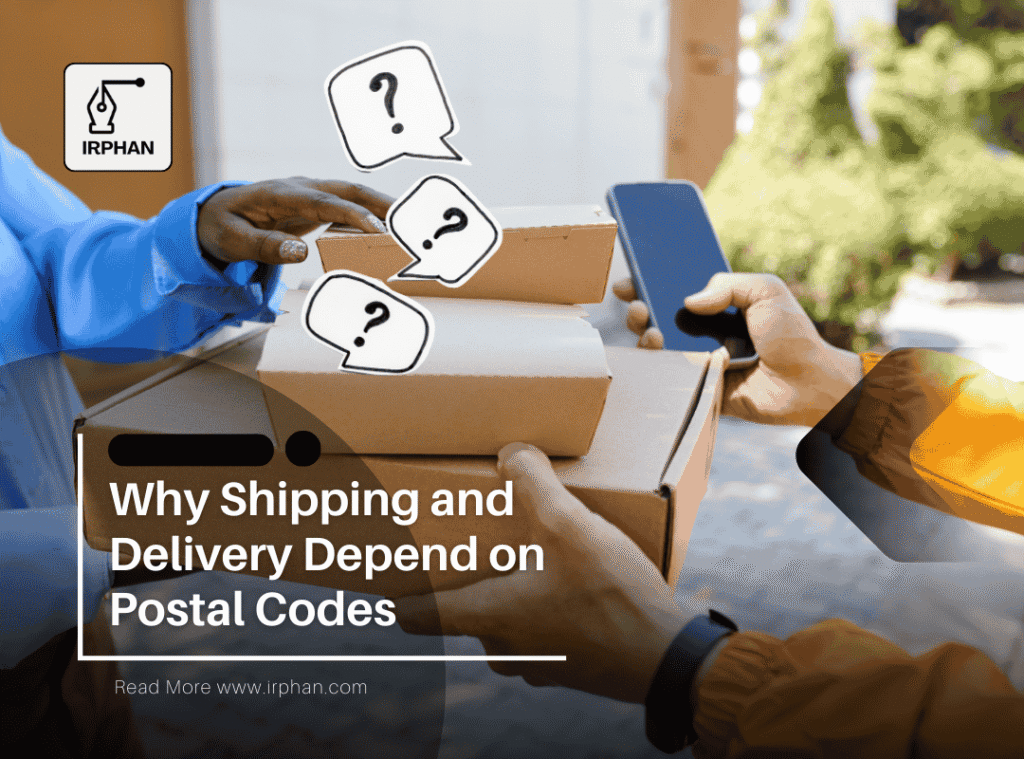
Shipping companies rely heavily on address verification.
They use it to:
- Avoid misrouted packages
- Reduce delivery costs
- Improve delivery speed
Similarly, service providers use verification to:
- Check service availability
- Activate utilities correctly
- Assign service regions
What Happens When an Address Fails Verification?
If verification fails:
- The user may be asked to correct details
- Delivery may be delayed
- Service signup may be blocked
In some cases, websites allow users to continue with a warning.
However, accurate verification always leads to better outcomes.
Country-Wise Use of Address Verification
🇺🇸 United States
- Zip codes are essential
- Verification is used for shipping, billing, and fraud prevention
👉 Users should always check their US zip code before submission.
🇬🇧 United Kingdom
- Postcodes are extremely precise
- Verification is fast and accurate
🇨🇦 Canada & 🇦🇺 Australia
- Postal codes define delivery and service zones
- Verification prevents regional errors
Does Address Verification Protect Users?
Yes, it does.
Address verification:
- Reduces fraud
- Prevents delivery failures
- Ensures correct service activation
It benefits both users and businesses.
FAQs
Is address verification mandatory?
Not always, but most delivery and service websites use it.
Can verification fail even if the address is real?
Yes, due to spelling mistakes or outdated records.
Does address verification slow down forms?
No. Most systems work instantly.
Final Thoughts
Understanding how address verification systems work helps explain why postal codes and accurate addresses are required everywhere.
These systems:
- Improve accuracy
- Reduce errors
- Protect users
- Support deliveries and services
Using the correct address details ensures a smooth and reliable experience.
Irphan’s Latest Posts
- Same Day Delivery Eligibility by Postal Code (Explained)
 Learn how same-day delivery eligibility by postal code works, why some areas qualify, and how to check availability before ordering.
 - Postal Code Based Delivery Zones Explained (Simple Guide)
 Learn how postal code based delivery zones work, how shipping companies define delivery areas, and why zones affect delivery time and cost.
 - How to Find the Correct Zip Code for Delivery (Easy Guide)
 Learn how to find the correct zip code for delivery, avoid shipping delays, and ensure faster, accurate delivery for online orders.